
Winter Horse Feeding Tips for Healthy Weight and Warmth
Cold weather changes the way horses use energy. A horse that held weight easily in autumn can start to look tucked up, ribby, or dull by mid-winter, especially if pasture quality drops, rain limits grazing, or a cold wind lifts their energy needs.
Good winter feeding is not about piling on grain. It starts with forage, water, body condition, and steady adjustments. The aim is simple: keep the hindgut working, help the horse stay warm, and stop weight loss before it becomes hard to reverse.
This guide is general information only. Horses with dental issues, metabolic conditions, ulcers, laminitis risk, pregnancy, heavy workloads, or ongoing weight loss need advice from a vet or qualified equine nutritionist.

1. Start with your horse’s current condition
Before changing feed, check what the horse actually needs. Winter coats can hide weight loss, and rugs can make it easy to miss changes until the horse has already dropped condition.
Run your hands over the horse every few days. Look and feel for:
Ribs that are becoming easier to see or feel
A sharper spine or hips
Loss of muscle along the topline
A tucked-up belly
Dull coat or low energy
Loose manure or changes in appetite
Use a body condition scoring system if you already work with one. The exact scale matters less than being consistent. Score the same areas each time, then write down the result.
A simple winter habit helps:
Check body condition weekly
Weigh tape every 2 to 4 weeks
Take side-on photos in the same place
Note feed changes, weather, workload, and rugging
This gives you a clear picture. If your horse is losing weight, you can respond early rather than making a large feed increase later.
2. Build the diet around forage
Forage is the most useful winter feed for most horses. Hay, pasture, chaff, haylage, and suitable fibre feeds support gut health and help horses generate warmth through fermentation in the hindgut.
In practical terms, forage does the steady work. It keeps the digestive system moving, reduces long gaps without feed, and provides a safer base than large grain meals.
Many horses do well when they receive around 1.5 to 2 per cent of their body weight in forage dry matter each day, though individual needs vary. A 500 kg horse may need roughly 7.5 to 10 kg of dry matter daily, more if underweight, growing, lactating, aged, or living in harsh conditions.
The key words are “dry matter”. Fresh grass contains a lot of water, while hay is much drier. In winter, pasture may look green but still fail to provide enough usable nutrition, especially during cold, wet, or low-growth periods.
Choose hay that suits the horse
Good hay should smell fresh, feel clean, and be free from mould, dust, weeds, and excessive stalkiness. It does not have to look bright green to be useful, but it should be safe and palatable.
Common options include:
Feed type | Best suited to | Watch for |
Lucerne hay or chaff | Horses needing more protein and calcium | Can be too rich for some easy keepers |
Oaten or Wheaten hay | Horses needing palatable roughage | Variable sugar and starch levels |
Mixed pasture hay | General winter feeding | Quality can vary between batches |
Beet pulp or soy hulls | Extra digestible fibre | Must be prepared as directed |
If hay quality is uncertain, feed testing is useful. It can show energy, protein, sugar, starch, and mineral levels, which helps you avoid guessing.
3. Increase feed gradually when the weather turns
Cold, wet, and windy conditions can lift a horse’s energy needs. So can clipped coats, poor shelter, age, dental trouble, and higher workloads. A horse does not need extra feed just because the calendar says winter, but they may need more when conditions demand it.
Make changes slowly. Sudden increases in hard feed can upset the gut and may raise the risk of digestive problems.
A safer approach is:
Add more hay first.
Split feed across more meals if possible.
Add a fibre-based feed if hay is not enough.
Increase concentrates only when needed.
Reassess body condition after 10 to 14 days.
Small changes are easier to judge. If the horse continues to lose weight, add more energy in a planned way rather than doubling feeds overnight.
Feed more before the horse gets cold
Horses cope best when they can eat before and during cold periods. If a cold front, storm, or frost is forecast, increase available forage ahead of time.
Long-stem hay before a cold night is often more useful than a bigger grain meal. It gives the horse something to chew and supports the slow fermentation that helps with warmth.
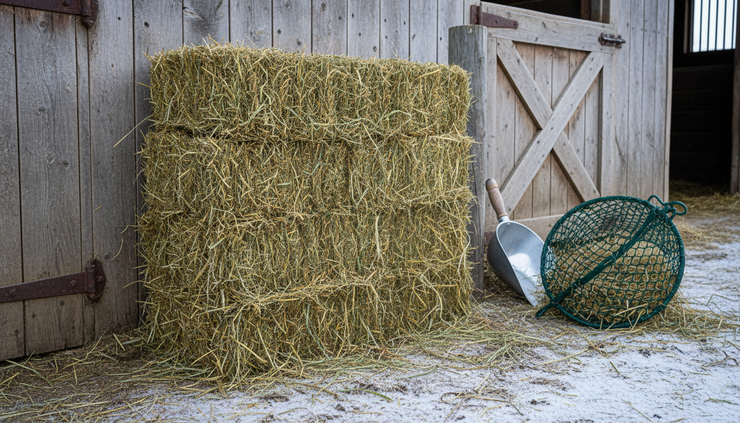
4. Select feeds that add safe energy
Some horses need more than hay to maintain weight in winter. The best choice depends on age, teeth, workload, health, and how the horse handles starch and sugar.
For many horses, digestible fibre and fats are useful ways to add calories without relying heavily on grain. These can be gentler on the digestive system when introduced properly.
Useful winter feed options may include:
Hay or chaff
The first place to add volume and chewing time.
Soaked beet pulp
A fibre source that can help with weight maintenance when prepared correctly.
Soy hull pellets
A digestible fibre option often used in complete feeds or fibre mixes.
Lucerne chaff or hay
Helpful when a horse needs more quality protein, though not ideal for every horse.
Vegetable oil or stabilised rice bran
Concentrated energy sources that must be introduced slowly.
Senior or complete feeds
Useful for older horses or those with poor teeth, especially when chewing hay is difficult.
Grain-based feeds can have a place, especially for hard-working horses, but large grain meals are rarely the first answer for winter weight loss. If concentrates are needed, divide them into smaller feeds and follow label directions.
When selecting a bagged feed, read the label closely. Match the feed to the horse’s life stage and workload, not just the promise on the front of the bag. A spelling pony in light work does not need the same feed as a performance horse, and an aged horse with worn teeth may need a different plan again.
5. Adjust portions for the individual horse
Feeding by scoop is easy, but scoops can be misleading. Different feeds have different weights, even when they fill the same scoop. A scoop of chaff, pellets, and grain will not weigh the same.
Use a scale at least once so you know what each feed actually weighs. Then write it down.
A basic winter feed note might include:
Horse name
Body condition score
Current workload
Hay amount per day
Hard feed amount by weight
Supplements used
Date of the last change
Notes on manure, appetite, and behaviour
Adjust portions based on results. If the horse is gaining too much condition, reduce calorie-dense extras before cutting forage too hard. If the horse is losing weight, increase forage and digestible fibre first, then add higher-energy feeds if needed.
Easy keepers still need careful winter feeding. They may not need extra calories, but they still need forage, minerals, salt, dental care, and movement. For these horses, slow feeders, low-energy hay, and paddock management can help maintain gut health without unwanted weight gain.
6. Keep water intake steady
Hydration is one of the most overlooked parts of winter feeding. Horses may drink less when water is icy, very cold, dirty, or far from shelter. Dry hay also increases the need for water compared with lush pasture.
Low water intake can contribute to digestive issues, especially when the diet contains more dry forage. Keeping water clean, available, and appealing matters as much in winter as it does in summer.
Practical ways to support hydration include:
Check troughs and buckets twice daily in cold snaps
Break ice where needed
Clean algae, feed, and manure contamination
Offer water near where horses spend time
Use safe warm water if a horse is reluctant to drink
Feed soaked fibre where suitable
Provide plain salt unless advised otherwise
Salt helps encourage normal drinking. Many horses do not get enough from a lick alone, so some owners add salt to feed. Ask your vet or nutritionist for a suitable amount, especially if the horse sweats during work or has health concerns.

7. Use supplements to fill gaps, not replace feed
Supplements can help, but they should not be used to patch a poor forage base or unclear feeding plan. Start with forage, water, dental care, and the right calorie level. Then look at what may be missing.
Common winter supplement categories include:
Vitamin and mineral balancers
Useful when the diet is mostly hay or pasture and may lack key minerals.
Salt and electrolytes
Helpful for horses in work, horses that sweat, or horses that need encouragement to drink.
Omega fatty acids
Often used to support coat condition and add some dietary fat.
Joint supplements
Sometimes chosen for older horses or horses that feel stiffer in cold weather.
Digestive support products
May be recommended for horses under stress, travelling, or changing diets.
Be cautious with stacking products. Multiple supplements can overlap, especially with selenium, iodine, vitamin A, vitamin D, and some trace minerals. More is not always better.
If the horse receives a fortified complete feed at the full recommended rate, extra vitamins and minerals may not be needed. If the horse only gets a small handful of feed, a balancer may be more suitable than a full performance mix.
8. Support older horses and poor doers early
Older horses often struggle in winter because of dental wear, reduced chewing efficiency, arthritis, or lower muscle mass. By the time an older horse looks thin, it can take months to rebuild condition.
Book dental checks as advised by your vet or equine dental professional. A horse that drops hay, quids, spills feed, or chews slowly may not be getting enough nutrition from long-stem forage.
Older horses may need:
Softer hay or chopped forage
Soaked hay cubes or pellets
Senior feed designed as a partial or complete forage source
More frequent meals
Extra shelter from wind and rain
A rug suited to their coat, health, and environment
Do not wait for severe weight loss. If a senior horse is starting winter already lean, build a plan before the coldest weeks arrive.
9. Match feeding with shelter and rugging
Feed helps horses stay warm, but it works best alongside good management. Wind and rain can increase heat loss, especially when the coat is wet or flattened. Shelter allows horses to conserve energy instead of burning it just to stay comfortable.
Useful winter management includes:
Access to windbreaks, trees, sheds, or shelters
Dry areas for resting
Rug checks for rubbing, fit, and dampness
Removing wet rugs and replacing them with dry ones
Extra forage during long periods of rain
Mud control around hay and water points
A rug does not replace feed, and feed does not replace shelter. Together, they reduce the pressure on the horse’s body.
10. Watch for early signs of winter weight loss
Winter weight loss often starts quietly. The horse still eats, still moves around, and still looks “okay” under a thick coat. Regular checks make the difference.
Act if you notice:
Ribs becoming more visible
Less padding over the rump
Loss of topline
Dullness or reduced stamina
Feed left behind
Chewing problems
Loose manure
A horse being pushed off hay by paddock mates
Group feeding can hide problems. Dominant horses may eat more than their share, while quieter horses stand back. If needed, separate horses at feed time or provide several hay stations spaced well apart.
For horses on shared pasture, put out more hay piles than there are horses. This reduces guarding and gives lower-ranking horses a better chance to eat.

11. Make changes one at a time
When a horse loses weight, it is tempting to change everything at once. That makes it hard to know what helped and can upset digestion.
Change one part of the diet, then watch the horse for a week or two. Track appetite, manure, energy, coat, and body condition. If you need to make a larger change, do it in stages.
A steady winter plan might look like this:
Week 1
Increase hay and check all horses are getting access.
Week 2
Add a soaked fibre feed if weight is still dropping.
Week 3
Review protein, minerals, and total calories.
Week 4
Call the vet or nutritionist if there is still no improvement.
Seek help sooner if the horse is old, unwell, heavily pregnant, lactating, has diarrhoea, stops eating, or loses weight quickly.
What success looks like by the end of winter
A good winter feeding plan is not dramatic. It is steady, measured, and built around the horse in front of you.
By late winter, the horse should have:
A stable body condition
Enough energy for normal work
A healthy appetite
Regular manure
Access to clean water every day
Plenty of suitable forage
A diet matched to age, workload, and health
The best winter horse feeding tips are often the simplest ones: feed enough forage, weigh what you feed, make changes slowly, keep water appealing, and check body condition with your hands as well as your eyes.
If a horse is holding weight, staying warm, and eating comfortably, the plan is doing its job. If not, adjust early and get professional help before small winter losses become a bigger recovery project.


Comments